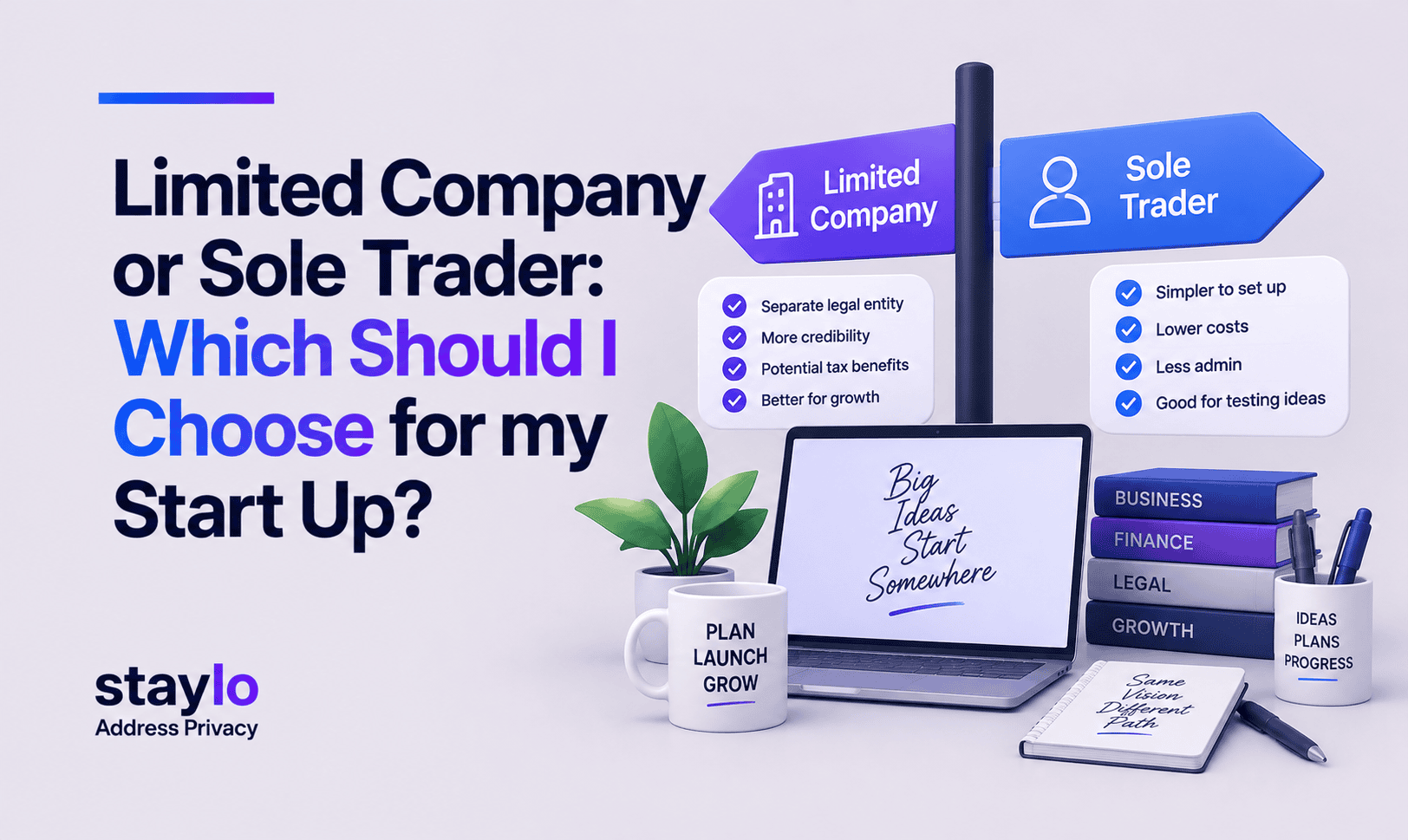
The core difference is legal separation: a limited company is a distinct legal entity from its owner, with its own finances and limited liability, while a sole trader has no legal separation from the individual — the business and the person are the same in the eyes of the law, and personal assets aren’t protected if the business runs into debt.
Limited company: what it involves
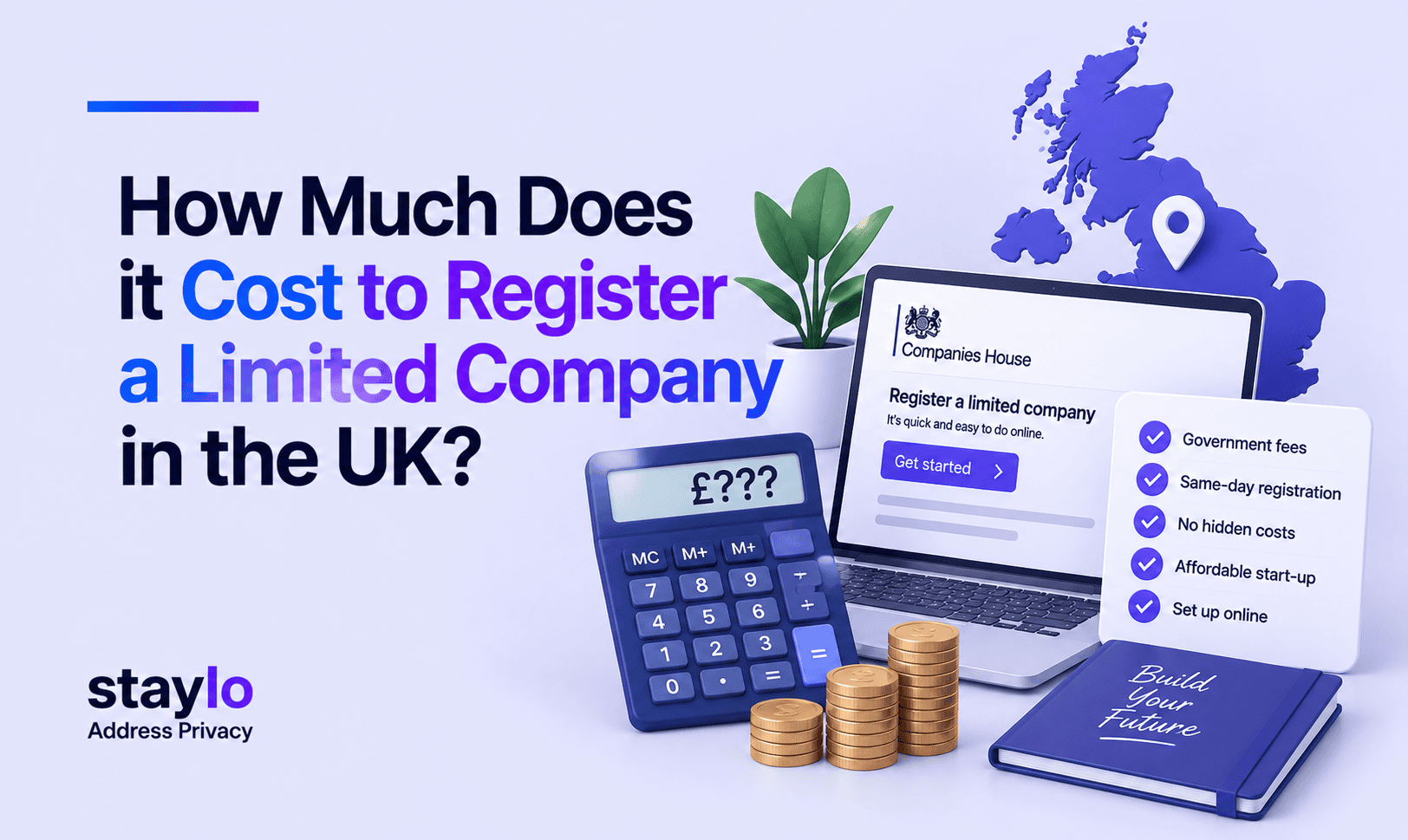
- Registration with Companies House required (currently £100 online), plus an annual confirmation statement
- A registered office address and director’s service address are mandatory and become public record
- Limited liability — personal assets are generally protected if the company can’t pay its debts
- More complex accounting: statutory accounts, corporation tax returns, and stricter record-keeping
Sole trader: what it involves
- No Companies House registration — just HMRC Self Assessment registration
- No registered office requirement, though an address is still needed for HMRC and for invoices
- Unlimited personal liability — personal assets are at risk if the business can’t pay its debts
- Simpler accounting: Self Assessment tax return, no statutory accounts required
Where the decision usually comes down to
For low-risk, low-asset businesses — particularly early-stage or one-person operations testing an idea — the simplicity of sole trader status often outweighs the benefits of incorporating. As turnover grows, liability risk increases, or a founder wants a more credible legal structure for investors, clients, or contracts, moving to a limited company becomes the more common choice.
The privacy consideration either way
Whichever structure is chosen, most founders end up wanting a business address separate from home: a limited company needs one publicly for the registered office and service address, while a sole trader needs one for HMRC correspondence and for display on invoices under UK trading disclosure rules — the underlying need doesn’t disappear just because the business structure is simpler.